


Herbs are something wonderful. They give most dishes that special touch and are also very healthy.
Unfortunately, it is very impractical to have to buy fresh herbs for every dish you want to cook. Many supermarkets offer fresh herbs in small quantities, but these unfortunately only last for a limited time and are not that cheap in the long run.
So it makes sense to plant all the herbs at home or buy them ready-potted.
But how do you manage to make them thrive on the windowsill at home? Here are a few tips and information on the most common herbs:
Chives like it bright
 Care: Chives also prefer it bright and sunny, possibly semi-shaded. They must also be watered well, preferably with lukewarm water. To ensure plenty of regrowth, trim them back regularly and fertilize after each cutting. Chives are perennial and reach heights of 10 to 50 cm. In a pot, they should be on a sunny windowsill or on the balcony.
- Taste: The taste is similar to onion and leek, although chives have a stronger and spicier note.
- KKitchen: especially delicious in egg dishes, soups, sauces, stews, or salads. Furthermore, they can improve the taste of a buttered bread, egg dishes (omelet, fried egg, egg salad, or scrambled eggs), fresh leaf salads, sour cream, herb dips, herb quark, mayonnaise, potato salad, potato soups. Only by finely chopping them do the essential oils emerge and give the herb its strong flavor. The flowers can also be used in the kitchen: they also taste like leek and are a beautiful eye-catcher in summer salads.
- Tip: beautiful decoration for dishes. The seasoning herb is sensitive to high temperatures and should not be cooked with the dish; it is better to sprinkle the chives over the dish just before serving.
- Storage: Chives can be frozen very well; they are less suitable for drying, as they lose aroma, flavor, and vitamins.
Extra Tip: Chives can be easily harvested with scissors.
Basil is a southerner
 Care: This southerner loves warmth and light. Therefore, a place in the sun, facing south, is ideal for it. What basil does not like is drafts! In addition, you should only pour water into the saucer. Make sure it gets water regularly. It is usually perennial, but due to our weather here in Austria, it is only annual and reaches a height of 20 to 60 cm.
- Taste: aromatic, spicy, slightly sweet, and somewhat peppery taste
- Kitchen: goes well with Mediterranean dishes like pasta and vegetable dishes. It is also very tasty with tomatoes, zucchini, and eggplant. A classic is tomatoes with mozzarella, where basil should definitely be served—just try it out! Furthermore, basil is a flavor highlight in sauces, fish dishes, herb pestos, and salads.
- Tip: Consume basil fresh, as its aromatic substances are lost during cooking; therefore, add it only after frying, cooking, or baking.
- Storage: the leaves can be dried or frozen. Freezing is the better option, however, as the aromatic substances are gradually lost during drying. Another option is preserving in neutral oil, such as olive oil.
Parsley loves the sun and the shade
 Care: Parsley likes it semi-shaded but with frequent sun and wants to be kept moist at all times. Ideal is soil that is also slightly limed. It is a 2-year plant species and grows between 25 and 80 cm tall. There are different types: flat-leaf parsley, curly parsley, root parsley, and flat-leaf parsley.
- Taste: The taste is spicy, fresh, intense, and "green". Flat-leaf parsley tastes significantly stronger.
- Kitchen: Parsley tastes very good in soups, stews, and with potatoes, in salads (shepherd's salad or tabbouleh), as an ingredient in Frankfurt Green Sauce, as parsley pesto, herb butter, herb quark, with fish and meat dishes. Do not cook parsley for too long, as it loses its intense aroma and vitamins. It is best to sprinkle it over just before serving or cook it only very briefly.
- Tip: beautiful decoration for dishes. For large plants, use only the leaves; the stems can still be used for soups and stocks.
- Storage: Parsley can be frozen as whole leaves or ready-to-sprinkle after thorough washing and drying.
Rosemary grows in the sun
 Care: This one likes it bright and sunny and wants plenty of space in the pot. It should be watered regularly, but be careful, it does not like waterlogging at all. Its growth height can be up to 2 meters; here in Austria, it usually reaches 70 to 100 cm.
- Taste: resinous, piquant, strongly aromatic – therefore use sparingly, rosemary has a strong seasoning power.
- Kitchen: Fits very well with Mediterranean cuisine, lamb, poultry, roast pork, veal, minced meat, tomato soups, and sauces. Also refines marinades & brines for grilled meat and fish. Goes well in salads, soups, potato, and mushroom dishes.
- Storage: can be dried very well. Rosemary can also be very well preserved in oil.
Tarragon likes partial shade
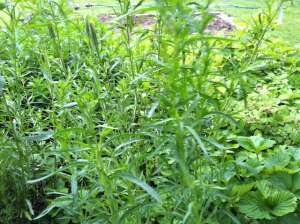 Care: This spice likes it bright, but it cannot tolerate direct sun, as it would dry out. It should be watered and fertilized regularly. Tarragon is a perennial herb and can reach a height of 100 to 150 cm.
- Taste: bittersweet, finely spicy, mild peppery sharpness
- Kitchen: With its mild, peppery sharpness, it is indispensable in French and Italian cuisine. It refines light sauces, soups, meat broths, vegetable soups, and herb sauces. Tarragon is used in the famous vinaigrette or béarnaise sauce, as well as with artichokes, asparagus, mushrooms, cauliflower, salads, all bean and raw vegetable dishes. Its note should also not be missing in the following meat dishes: meat ragouts, liver, heart, poultry, and poultry fillings, game dishes, as well as for pickling and marinating meat and fish.
- Tip: Tarragon can be cooked with the food, because the aroma is not impaired during cooking; on the contrary, the taste becomes even more intense when cooked.
- Storage: Tarragon should ideally be used fresh, but it can also be frozen. It can also be dried, but significant loss of quality is to be expected here. Harvest and use only the leaves, not the flowers or branches!
Mint sprouts at the window
 Care: This spice prefers partial shade, so a window seat in the northeast would suit it best. Also, make sure it is always kept nice and moist. There are various varieties here that can reach heights of 70 to 120 cm, but the most well-known is peppermint.
- Taste: due to the ingredient menthol, mint has a very refreshing effect.
- Kitchen: Mint is very good in cocktails or with desserts. Prepared as tea, mint is very digestible. A good Mint syrup can also be made from mint.
Tip: the following herbs can also be used as natural home remedies against ants can also be used.
Thyme does well in the sun
 Care: Thyme also loves the sun and needs it very bright. It tolerates direct sun very well. You don't need to water it much and only fertilize it a little. It is important to always remove the flower stalks quickly. The height of thyme can reach 10 to 40 cm.
- Taste: This spice smells very spicy and captivates with its mild peppery, piquant sharpness and tastes lovely at the same time.
- Kitchen: fits very well with fatty roast pork, lamb and mutton, homemade dishes, game and poultry dishes, veal. Thyme flavors: mushroom and tomato dishes, and fish, but it can also be drunk as tea. Furthermore, it goes well with fried potatoes, potato gratins, tarte flambée, leaf salads, or sheep's cheese baked in aluminum foil. It harmonizes very well with bay leaf, nutmeg, rosemary, and sage.
- Tip: Tarragon has a multiple effect on our health, especially on the respiratory organs.
- Harvest: It is best to harvest thyme branches or leaves when it is not in the flowering phase, because during flowering, the leaves lose some of their aroma.
- Storage: Thyme can be dried or frozen. Both can be used well here, as the leaves even intensify their aroma when dried.
Lavender – the sun worshiper
 Care: Lavender requires little water and is a real "sun worshiper". Therefore, it feels most comfortable in a location where it is exposed to the sun as much as possible. The spice can develop quite a large shrub over the years. Therefore, lavender should be pruned back heavily after flowering. Lavender is perennial and can reach heights of 40 to 70 cm. Lavender is only partially frost-tolerant; in pots, it should overwinter in the garage or in the cellar in unheated areas. Outdoors, it should be covered with coverings such as mulch material, straw, brushwood, or leaves.
- Taste: The aroma is similar to that of rosemary and is therefore partly bitter and spicy.
- Kitchen: Young, soft shoots not only refine fish, poultry, and lamb, but also give sauces and soups the finishing touch. Dosed in small quantities, lavender also refines the salad of your choice. Tastes very good combined with thyme or rosemary. Rubbed or chopped lavender leaves refine cheeses such as goat cheese, soft cheese, Gorgonzola, or raclette cheese. Hearty cream soups also taste even better with it. Always dose sparingly, as the leaves are very aromatic. The flowers are often used for decorations on desserts: fruit salads with berries or in cakes or truffles as well as for ice cream receive an excellent aroma.
- Tip: In the kitchen, always use true lavender (Lavandula angustifolia) and not French lavender.
Borage
 Care: Borage, also called cucumber herb, must be sown in deep and larger plant containers, as the herb forms quite long taproots. Also, be careful with night frosts; the plant is not frost-tolerant and therefore not hardy. Borage forms plenty of seeds itself, so you can plant new borage every year.
- Taste: The leaves of borage taste like fresh cucumbers with a slightly acidic note. In the kitchen, use only fresh herbs, as the plant loses its aroma quite quickly when dried.
- Kitchen: The leaves are often used as an addition to cucumber salads. Borage is often used together with dill, as the two complement each other very well. Fresh borage leaves can also be used for quark or cream cheese preparations. Cooked, the herb does not bring much as it loses all its aroma and active ingredients. Therefore, sprinkle the leaves only on finished cooked and already cooled dishes or sauces. The flowers are also edible and can be candied and thus garnish desserts such as muffins, cakes, semolina pudding, or jams. Furthermore, the flowers can serve as decoration in wild herb salads or wild herb soups or on cocktails.
- Tip: If borage is to be preserved, do not dry it but preserve it in oil or vinegar.
- Info: Do not eat too much borage; long-term or excessive and frequent consumption can lead to liver-damaging effects.
Also read: Correct layout of vegetable and herb beds
Pictures by Sabine & Janine, meinhaushalt.at


2 comments
Comments are closed.